AI Films · AI for brands
AI fashion campaigns: video for clothing brands
By Ekaterina Danberg · November 2026
AI video works for fashion when it sells the world around a collection: the character, the place, the story. It's weak on the things shoppers return clothes over, which are fit, drape, weight and true color. I'd build campaign film from real garment references and keep real photos on real bodies on every product page. I haven't worked with a clothing brand yet.
What I have made is AI characters who hold up across a whole film, an AI series, and a jewelry ad with pieces worn by a generated model. So I can speak from experience about faces, styling and matching a real product. The garment-specific parts below are how I'd approach a first collection, and I'd prove them on one look before you commit the rest.
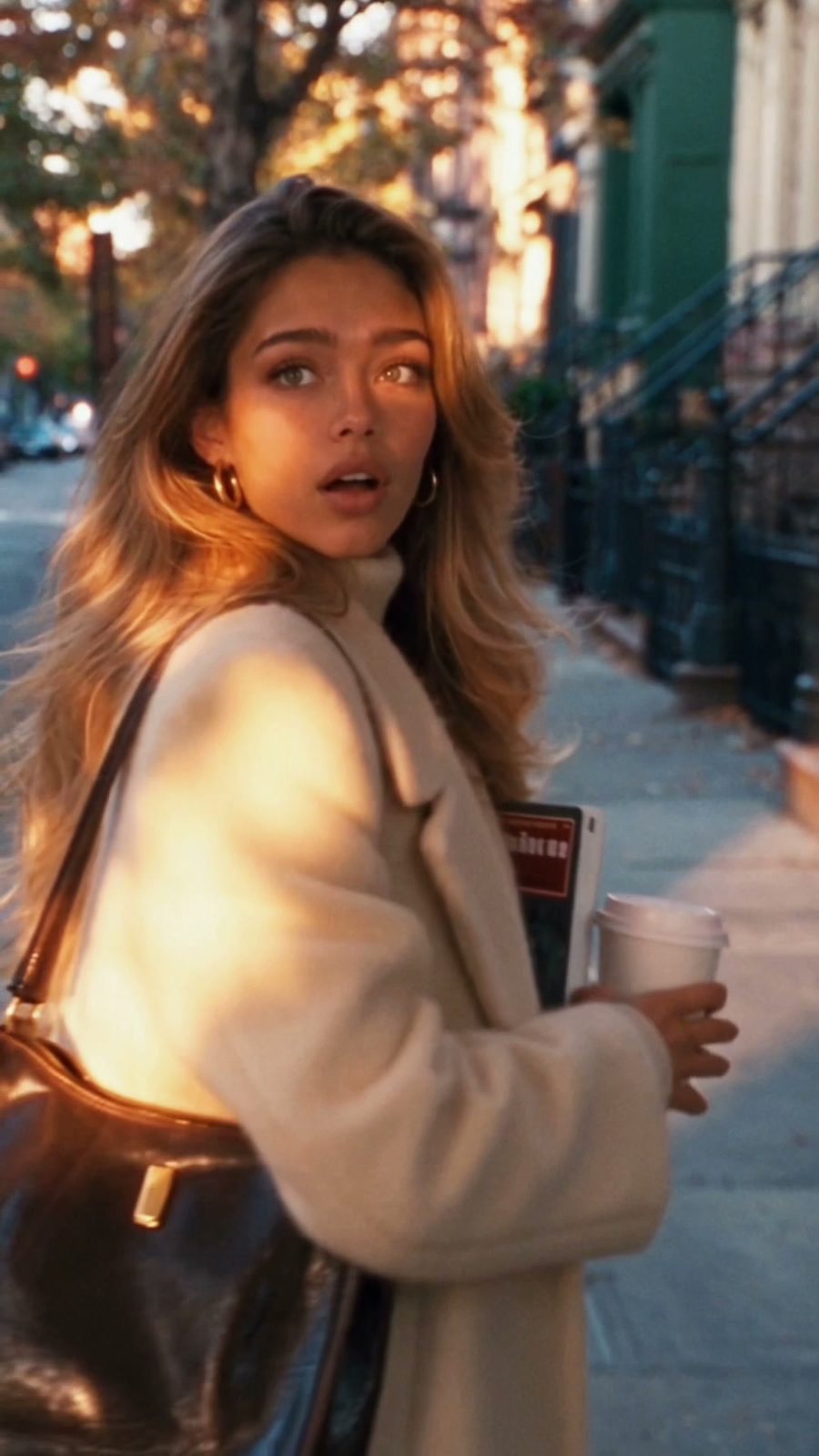
Three ways to put a person in the film
| Route | Works best for | What you take on |
|---|---|---|
| Generated character | Story-led or stylized campaigns, a face that returns each season | Disclosure rules, audience reaction, and matching the garment on a body that doesn't exist |
| Digital twin of a real model | Extra looks or markets with a model you already work with | Written consent covering scope, pay and duration, plus the model's agency |
| Real model filmed, generated world | Clothes that must be exact when travel to a location isn't possible | A studio day, and matching the light on the person to the generated place |
The third route is the one I'd suggest to most brands selling on fit. H&M went the second way and published its terms: FashionUnited reported that 30 models had agreed to AI twins, that they control how those twins are used and are paid as they would be for photographs, and that the first images would carry a watermark. I'd treat that as the floor for any brand going down this road.
Consent, disclosure and the invented maker
This is general information and not legal advice. New York's Fashion Workers Act took effect on June 19, 2025. Morgan Lewis's summary says clients must obtain "clear and conspicuous prior written consent" for any creation or use of a model's digital replica, stating the scope, purpose, rate of pay and duration. An old release that says "all media" is not something I'd rely on. Ask your lawyer whether the Act reaches your shoot.
A wholly generated person raises a different set of rules. In a New York ad, General Business Law section 396-b requires a conspicuous disclosure of a synthetic performer when the advertiser knows one is there. In the EU, Article 50(4) of the EU AI Act has applied since August 2, 2026 to generated content that resembles existing persons and would falsely appear authentic, so a twin of a real model is the case to look at closely.
Fashion has one trap of its own, which is the generated atelier. In April 2025 the UK's Advertising Standards Authority upheld a complaint against a boot seller whose ads showed AI-generated images of a man making shoes in a workshop. The ASA concluded consumers would think the boots were handmade by him, and it had seen no evidence they were. A generated seamstress in a sunlit studio tells the viewer who made your dress, so I only write that shot if it's true.
Fabric by fabric: where I'd expect trouble
This table is my test plan. Nothing in it comes from a clothing job yet.
| Material | What I'd expect to break | How I'd handle it |
|---|---|---|
| Satin and silk | Highlights that look like plastic | Name the real light and the real material first in the prompt |
| Chunky knit | Stitches crawling between frames | Keep it at mid-shot and freeze-frame against the photo |
| Denim | The wash and whiskering redrawn each cut | Reference of the actual wash, and no macro without a test |
| Sheer layers | What's underneath appearing and vanishing | Test first, and film it for real if it fails |
| Stripes, checks, prints | The pattern sliding across the body, repeats changing | The hardest case. I'd default to real footage |
| Pleats | Pleat count drifting mid-move | Short takes, count against the garment |
| Buttons, zips, hardware | Wrong count, buttoning on the wrong side | Write the exact count and side in the prompt |
| Logos and woven labels | Letters melting | Add your real artwork in the edit |
Movement needs a physical cause. In one scene of mine, a draft from an open door laid every candle flame over in one direction and let them come back, and that one cause did more for the shot than any instruction to flicker. A skirt needs the same thing: a stair, a car door, a step off a curb. "Flowing dress" tends to get you a dress floating in air that isn't moving.
Descriptions of a state get taken literally too. I once wrote "messy after a sleepless night" for a character's hair and got flat hair with no volume. Now I describe the shape I want.
Proportion, pose and styling
When I built a long-legged, model-proportioned character for one project, the first version came back short. Part of the fix was the camera. I put it at hip height, because from above legs shorten, and I'd do the same for any full-length look.
Poses from reference sheets are the next problem. On one film a character took the stance from her sheet and held it, standing like a figurine while the other character acted. So each person gets their own action for each stretch of the timeline, and sheet poses are banned in the prompt. Faces need watching as well: one doll-style character came back with a stock face, and I had to correct the eyes, brows, nose and lips one at a time. Left alone, you get the same face every other AI campaign has.
Styling needs a reason to be there. I had a character at home at night with sunglasses pushed up on her head, and it read wrong as soon as I saw it. Now I ask of every item why it's in that scene. A strongly stylized campaign, a doll or an animated world, is also an honest way out of the fit problem, since nobody reads it as sizing information. It takes a different method: naming a real camera and lens in the prompt turned one of my doll characters back into a photograph of the actual woman.
Where each one belongs
I'd generate the location, the weather, the story, supporting characters, a teaser ahead of a drop, and regional cuts of a campaign set in a different city. A brand can also pitch a concept internally this way before paying for a shoot.
I'd keep real anything a shopper uses to choose a size or a color, any close-up that makes a claim about fabric, and any claim about who the clothes are cut for. Generating a larger body in your dress says the dress is made for that body, and the pattern may say otherwise. If you run AI clips near product pages, watch your returns marked "not as pictured" alongside the usual numbers. If you'd like to try this on one look, that's the AI film work I do.
What I'd ask you to send, per look
- Flat or ghost-mannequin photos from the front, back and side on a neutral background.
- One on-body photo, with the model's measurements and the size worn.
- Close-ups of fabric, trims, closures and the inside of the collar.
- A 10-second phone video of the fabric moving, shaken or walked in. It tells me the weight better than a photo does.
- A color reference: the lab number, or a swatch photographed beside a gray card.
- Logo vectors and your styling rules, including what never gets worn together.
- Signed consent for any real person whose likeness we use.
What fashion people catch
- Buttons that swap sides or change number between cuts.
- Stripes that don't meet at the seam.
- A bag strap that merges into the coat.
- A hem that's shorter in the next shot.
- Wool moving with the lightness of chiffon, which gives away the weight.
- Fingers disappearing into a pocket that isn't there.