AI Films · AI rules
Can you copyright AI videos? Who owns them
By Ekaterina Danberg · November 2026
In the US, footage generated purely from prompts probably has no copyright owner at all. Protection attaches to what people add: the script, the edit, the selection and arrangement of shots, and changes that contribute new authorship. A contract then decides who holds those rights, but it can't create protection that doesn't exist. This isn't legal advice.
This article covers US law only, as of November 2026, and it's general information from a producer. A copyright lawyer should look at anything you plan to enforce, register or sell. I wrote it because clients reasonably assume that paying for a film means owning all of it, and with AI footage that needs a longer answer.
What the law says so far
Stephen Thaler tried to register an image listing his AI system as its sole author. The D.C. Circuit held that the Copyright Act requires a human author, and the Supreme Court declined to review the case on March 2, 2026. That settles the easy version, where no human claims any part in the work. It doesn't say how much human involvement is enough, because Thaler disclaimed any.
The harder version is what the Copyright Office addressed in Part 2 of its AI report, published in January 2025. Its conclusion on the thing most people assume protects them is that "prompts alone do not provide sufficient human control" to make a user the author of the output, because prompts work as instructions conveying ideas. Elsewhere the report is more encouraging. Outputs can be protected in whole or in part where AI is used as a tool and a person determined the expressive elements, each case is decided on its facts, and the report gives a film as an example: one containing AI-generated effects or background art is copyrightable as a whole, even if those elements alone aren't.
A court may yet draw the line differently. Allen v. Perlmutter, about an image made through hundreds of Midjourney prompts, was still pending in Colorado in the most recent reports I could find.
A film, layer by layer
"Who owns the video" is really nine questions. This is how I separate them on my own projects.
| Layer | US position, roughly | What to settle |
|---|---|---|
| The idea | Ideas aren't protected | Confidentiality, if it matters |
| Script written by a person | Protected | Transfer or license to the client |
| Raw generated clips and images | Likely unprotected on their own | No promise of exclusivity |
| Generated character sheets | Likely thin, unless human expression is visible in them | Who may reuse the character |
| Human changes to AI output | The new authorship can be protected | Record what was changed |
| The final edit | Selection and arrangement can be protected | Transfer or license to the client |
| Music | Depends on source and license | Whether paid ads are covered |
| A real person's face or voice | A consent and publicity question, separate from copyright | Written permission and its scope |
| Photos and products you supply | Stay with whoever owns them now | Your confirmation that you can use them |
What that looks like on a real film
The Tooth Fairy is about 30 seconds long. Its cut sheet lists exactly what went in: 13.3 seconds from one generation, 2.3 seconds from an extension, a 12-second clip made separately from an edited still, and a last piece from the end of the extension. I chose those pieces, rejected the rest and decided their order and timing. I wrote the story and set the scale and blocking of each character. That's the kind of human contribution the report describes.
The report cites the Office's Zarya of the Dawn decision, where a graphic novel's text and its selection and arrangement of images were protected and the Midjourney images themselves were not. Applied to a film, I read that as: the assembled film may be protected, and a frame pulled out of it may not be. A footnote adds that arranging only two or three elements generally isn't enough. So a single 15-second generated take with a title on it strikes me as a much weaker claim than a cut of a dozen shots written and arranged by a person.
The report's film example is about AI inside a human-made film. A film where every image is generated is a harder case than that example, and I wouldn't tell a client otherwise.
Where this bites a brand
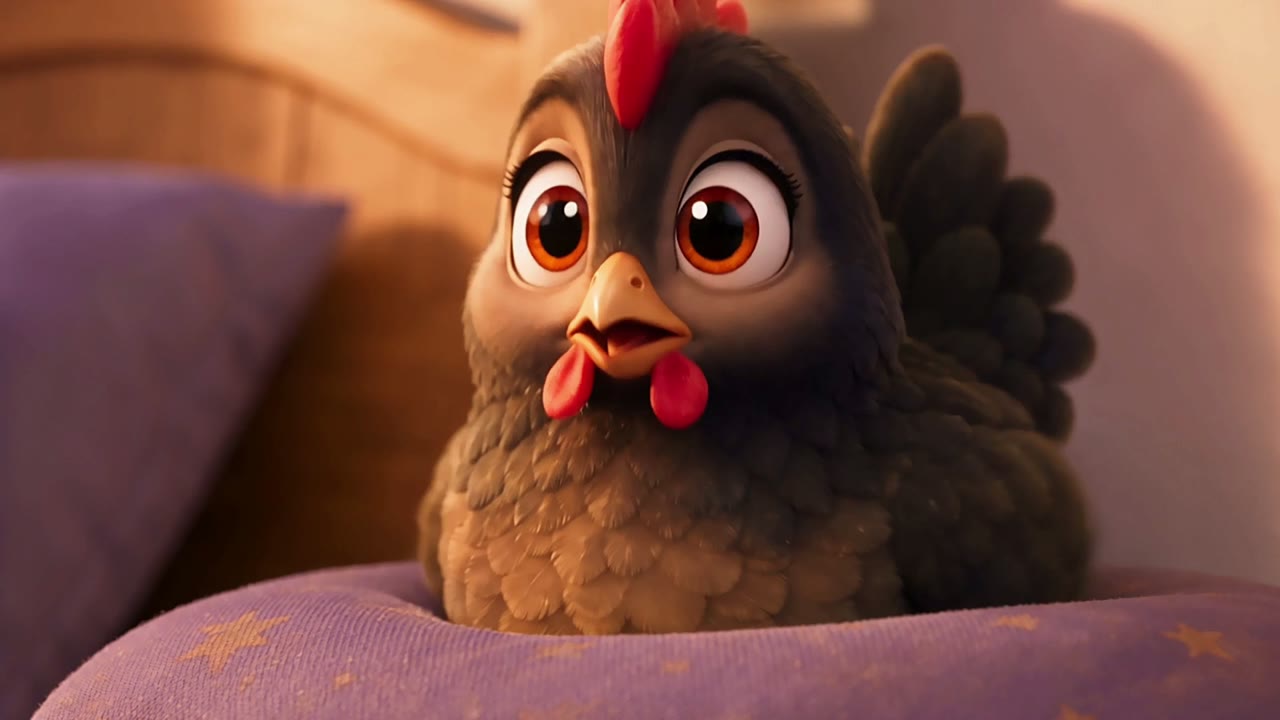
A mascot is the clearest case. If your plan is to build a long-running character from generated images, someone copying its look may be harder to stop than you'd assume. The report says human-authored material that stays perceptible in an output can be covered. So if a character is central to the business, I'd have a person draw it first and use that drawing as the input, and I'd ask a lawyer about registering a name or logo through trademark, which is a separate route.
The tools add one more layer. OpenAI's terms say you own the output to the extent the law permits, and assign OpenAI's rights "if any." That's useful, because the company isn't claiming your image. It also can't give you a copyright that the law doesn't recognize. Terms differ by tool and sometimes by plan, so ask your producer which were used and on what terms.
What I'd put in the agreement
Here's how I'd approach the rights section, for your lawyer to tighten:
- The client receives whatever rights exist in the finished film, stated as a transfer or a license
- No promise that AI-generated frames can be registered or will be exclusive
- A list of the AI services used
- The client confirms they have the right to use every photo, product and person they supply
- Written consent for any real person's likeness, from a parent or guardian for a child
- Music and voice, with what each is cleared for
- Whether the producer may show the film in a portfolio, as its own yes or no
Keep the paper trail
If registration is ever on the table, the Copyright Office's registration guidance says applicants have a duty to disclose AI-generated content and briefly explain the human contribution. AI material that is more than de minimis should be excluded from the claim. You can claim the selection, coordination and arrangement of the human and AI parts.
That's easier with records. On my projects I keep the script, the approved sheets, the prompts and the cut sheet. Ask whoever makes your film to keep the same.
FAQ
- If I paid for it, don't I own it?
- You own what the contract gives you and what the law protects. Paying doesn't make unprotected footage protected, and without a written agreement the human-authored parts may stay with the person who made them.
- Can someone reuse my AI ad?
- Copying the whole edited film is a stronger thing to object to than lifting one generated clip. A real logo, product or person in the ad brings other rights into play. Ask a lawyer before acting on either.
- Does adding a lot of prompts make me the author?
- The Copyright Office's current answer is that prompts alone don't, however many you write. The pending Allen case tests that position.
- What about outside the US?
- Other countries answer this differently, and I haven't covered them here. Check the law where you'll sell or enforce.