AI Films · AI cost and choice
AI vs traditional video production: how to choose
By Ekaterina Danberg · November 2026
Choose a traditional shoot when the ad depends on a real person's performance, a real place or a product claim the viewer will rely on. Choose AI when the idea can't be filmed at a sensible cost: an invented world, an impossible scale, a character who doesn't exist. When a brief needs both, split it by shot.
I sell AI films, so weigh this accordingly. I've also spent four years producing filmed video for other people's accounts, writing shoot briefs, reviewing footage and giving edit notes, and I know what a camera does that a generator can't. These are the questions I ask when a brief comes in, in the order I ask them.
Would the ad become untrue if it were generated?
This goes first because it can end the discussion. If an ad shows how a cream changes skin, how a sauce pours, how a dress falls on a body or what a hotel room looks like, the viewer takes the picture as evidence. Generate it and you've made a picture of something that never happened. I'd shoot those, or at least shoot the part that carries the claim.
People's words work the same way. The FTC's rule on fake reviews and testimonials reaches AI-generated ones, so a generated customer praising a product nobody used is off the table whatever it would cost to make.
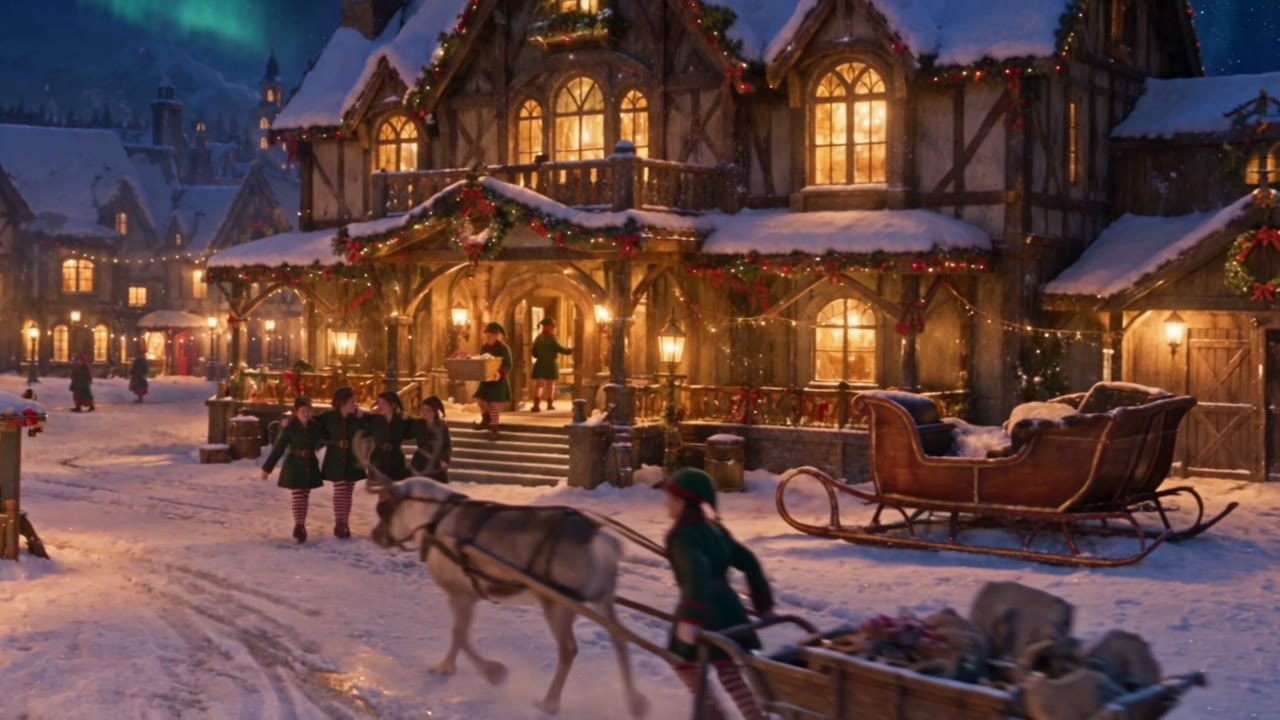
Mood, setting and story carry no such claim. A snowbound village at night tells you how a film feels and promises nothing about a product.
Does it depend on a performance?
An actor can give you the same line a little softer. A generator gives you another roll of the dice. On The Tooth Fairy I asked a sleeping girl to wrinkle her nose and got something close to crying. In another take she opened her eyes, with an instruction to keep them shut sitting right there in the prompt. Speech is harder still. The Golden Ticket has 27 spoken lines, and generated speech in the original language was the weakest part of the raw footage, so the voice work moved to a separate tool and went in during the edit.
If your ad rests on a comedian's timing, a founder's conviction or a child really laughing, book the person. If nobody speaks on camera and the feeling can be read from a face in a short shot, AI can carry it.
Can it be filmed at a sensible cost at all?
This is where AI earns its place. The Tooth Fairy needed a fairy about half a meter tall and a mouse wearing a backpack, working around a sleeping child's pillow at night. Halloween Adventures is a girl in a space suit whose best friend is a chicken. Filmed, those are puppetry, visual effects and a child on set after bedtime. Generated, they're a writing and selection problem.
Period settings, a concept film for a product that doesn't exist yet and a world that changes style from shot to shot follow the same logic. Children are a particular case, since a film built from photographs means nobody has to sit under lights. The photos bring their own privacy questions, though.
How much has to stay identical?
A real shoot gets continuity for free. The clock on the wall is the same clock in every setup. In AI every shot is made separately, so sameness has to be built and then checked. On one commercial the wall clock in the empty room had no markings and the clock in the shot with the character had twelve. Now I write a continuity table before any frames exist, listing what changes with the story and what never changes.
The Golden Ticket held one child's face for 2:47. That took reference sheets from the start and a great many rejected takes: from shot 10 to the end alone I wrote 43 video prompts. It can be done. If you need the same real spokesperson across twelve ads, a morning with that person will be simpler.
How will this audience take it?
In December 2025, McDonald's in the Netherlands pulled a 45-second AI Christmas ad after an online backlash. Some people objected to the AI itself and some to a message that came across as cynical about the holidays. I'd expect a family brand to be judged harder on that combination than a studio making an obvious fantasy.
Ask who will see it and what they already feel about AI in your category. Then check what you'd have to say about it, because disclosure rules apply to some AI ads depending on what's shown and where it runs.
Which route I'd pick, by job
| Job | I'd choose | Why |
|---|---|---|
| A founder or customer telling a true story | Shoot | The person is the proof |
| Testimonial or before-and-after | Shoot | A generated result is a false result |
| A hotel, restaurant or home for sale | Shoot | The viewer is about to visit or buy that exact place |
| Close detail a shopper will rely on | Shoot or photograph | Texture and finish are the claim |
| Sports, events, anything that really happened | Shoot | It's a record of the day |
| Mood film for a launch | AI | Nothing in it is a promise |
| Mascot or character across episodes | AI with reference sheets | No actor, set or costume to rebook |
| Fantasy, period or impossible scale | AI | The alternative is heavy visual effects |
| Testing several concepts before a big shoot | AI first, then shoot the winner | You see the idea before committing a crew |
Combining the two
The simplest combination uses real product photos as references for generated scenes. That's how I worked on the jewelry ad on my site: the pieces had to match the originals and everything around them could be invented.
The bigger version films the person and generates the world around them. My AI films so far have been fully generated, so here's how I'd approach it. Shoot the performance and the product claim first, since those are the parts that can't be generated honestly. Lock that edit. Then generate establishing shots, transitions and anything impossible, timed to the real footage, and match their color to it.
What changes after sign-off
The two routes get expensive at different moments. On a shoot it's the wrap: after that, wardrobe, casting and location live in the footage. In AI it's the jump from still image to moving video. Changing a still is cheap, and I'll correct an approved image many times before risking a generation. Once a clip exists, you can't ask for the same take with the head turning a beat later. You get a new take, and scale, light or the face can move with it. When I extended a Tooth Fairy clip, the fairy shrank and a coin came out as big as her head.
So approval sits somewhere else too. For a shoot you approve casting, location and wardrobe. For AI you approve the script, the character sheets and a few test frames before any video is made. If you're comparing budgets next, I've written up what moves the number.